
Local Influencer Marketing: A Guide for Small Businesses (2026)
Summarize this article with AI
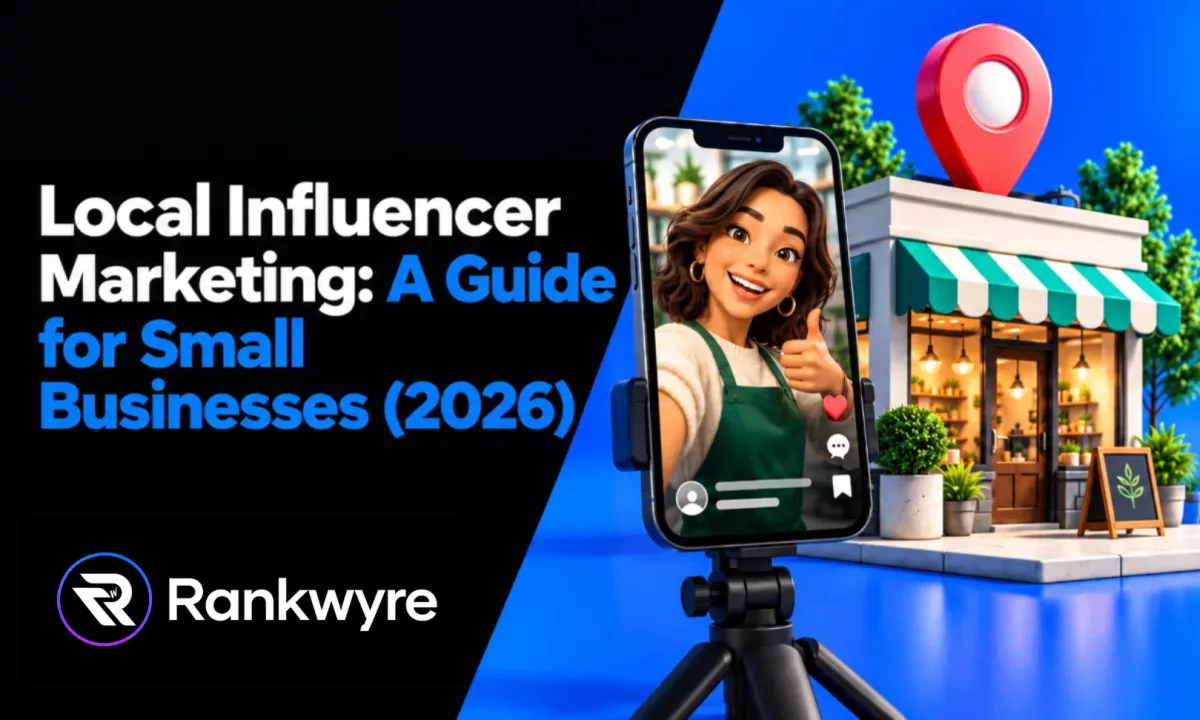
You run a restaurant, a salon, a gym, or a med spa, and you keep seeing other local businesses get a line out the door after some creator posts about them. You want that, but you do not know how to find the right person, what to pay them, or how to know if it even worked. That is local influencer marketing, and a single post from the right local account can bring in people who live nearby.
This guide covers how to find creators in your city, how to check that they are worth paying, the deal structures businesses actually use, what it costs, how to stay legal, and how to run outreach without sounding like a form letter. It ends with common mistakes and a tools table.
Key Takeaways
- Local influencer marketing means paying a creator who lives in or near your service area to post about your business to their own local audience, not a national creator with a huge but scattered following.
- The cheapest way to find local creators is to search your own city and neighborhood hashtags and location tags, and to check who has already tagged your business for free.
- Vet every creator on three things before you pay them: where their audience actually lives, whether their engagement looks real, and what their past sponsored posts looked like.
- There is no single going rate for a sponsored post. What a creator charges depends on the deal structure (free product, flat fee, affiliate code, or event invite), the deliverables, and whether you want to reuse the content in your own ads.
- Under FTC rules, the influencer must disclose the relationship clearly, and your business can also be held responsible if your creators do not disclose it.
- A unique discount code, a dedicated landing page link, or a simple "how did you hear about us" question at booking are the three practical ways a small business can measure whether a post actually drove customers.
What Is Local Influencer Marketing?
Local influencer marketing is paying (in cash, product, or access) a content creator whose audience lives in your city or neighborhood to post about your business. The goal is getting your business in front of people who can actually walk in, book, or order this week, not building abstract reach.
This is different from national influencer marketing, where a brand pays a creator with a huge, geographically spread following to build broad awareness for a product anyone anywhere can buy online. A restaurant, a med spa, or a gym only serves people who can physically show up, so a creator with 4,000 followers in your own city is often more useful than one with 400,000 followers scattered across the country.
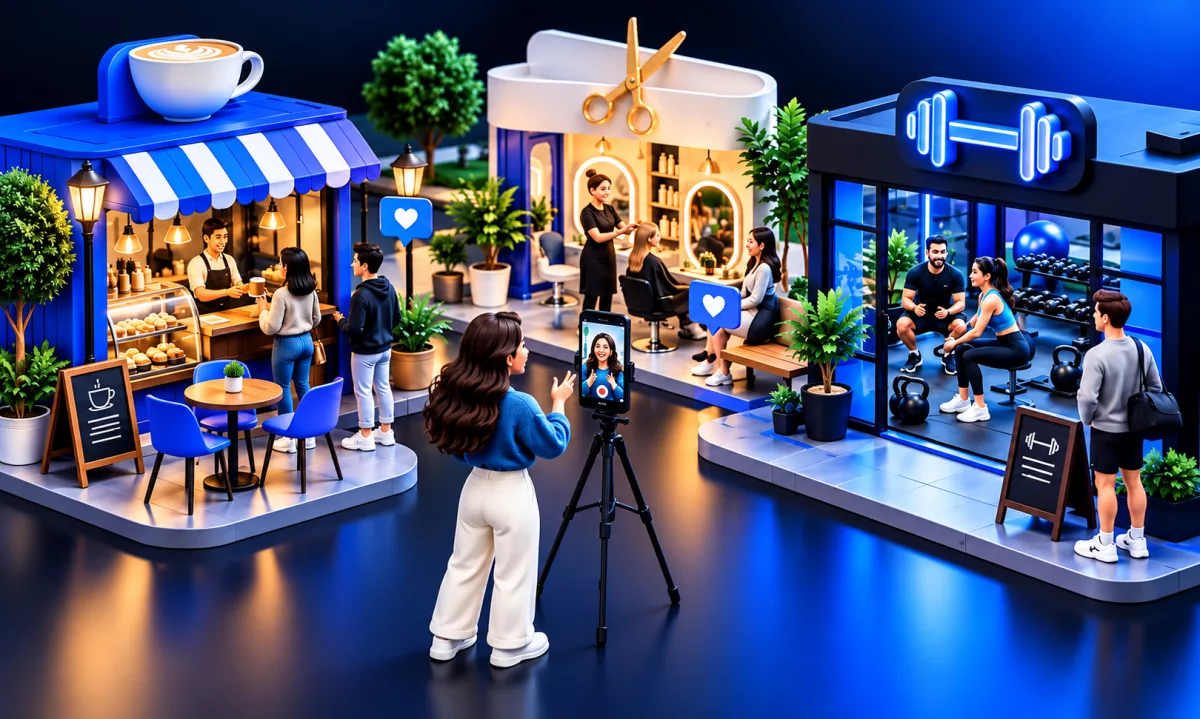
Why This Works for a Restaurant, Salon, Gym, or Med Spa
It works because these businesses sell an experience people want to see before they book it. A plate of food, a haircut, a workout class, or a treatment room all look and feel different depending on who is showing them to you.
A local creator who already has your ideal customer's trust does two things a paid ad cannot: they show the real place, and they vouch for it in their own voice. For a med spa, where the decision involves some nervousness about a new provider or a new treatment, that vouching matters more than a coupon. For a restaurant, a single post of a full table on a Friday night does more than any menu photo you post yourself.
It also plugs directly into two things these businesses already depend on. A restaurant or salon lives on social media content and needs a steady supply of it. And a creator's post is only worth as much as where it sends people, so pairing it with a clean landing page or booking link matters as much as the post itself.
How to Find Local Creators
Start with two free searches before you spend a dollar on any influencer discovery tool.
Search your city and neighborhood hashtags and location tags. Every platform lets you search a place name, and Instagram's own help center guidance on posting and adding locations confirms that a location tag puts your post on that place's public location page, in location search, and on the map, which is exactly how you find people who already post from your neighborhood. Search your city name, your neighborhood name, and tags built around your industry (a food account might use #dallasfoodie, a fitness account #denverfitness). Scroll past the big accounts and look for people with a consistent posting habit and comments that read like real conversations, not emoji spam.
Check who has already tagged your business for free. Look at your own tagged photos and mentions on Instagram and TikTok. Some of your best partners have already posted about you without being asked, which tells you two things at once: they genuinely like your business, and their audience is already primed to trust what they say about you.
This second search is sometimes called hyper local influencer marketing, because you are not casting a wide net across an entire metro area. You are working from the small pool of creators who already live near your door, already eat at your restaurant, or already work out at your gym.
A few other ways to build the list:
- Ask your regulars. Your best customers often follow or know local creators in your category.
- Check who your closest local competitor's fans overlap with, without approaching that competitor's own paid partners.
- Search TikTok and Instagram for your city name plus your category (a med spa searches "your city botox," a gym searches "your city gym").
- Look at the tagged locations of other businesses on the same block or in the same strip mall. A creator who covers a neighborhood tends to cover several businesses in it.
How to Vet a Local Creator
Check three things before you agree to anything: where their audience lives, whether their engagement looks real, and what their past sponsored posts looked like.
Audience location. A creator can have a big local-sounding handle and a following that is mostly outside your city. Ask to see their platform's own audience breakdown (both Instagram and TikTok show creators a location breakdown of their followers), or ask them to screen-share it on a call. If most of their audience is not within a reasonable drive of your business, the post will not convert the way you expect.
Real engagement. Read the comments, not just the count. Real engagement looks like specific replies ("just went here, the tacos were great") and questions ("what's the address?"). Fake or bought engagement looks like generic one-word comments, emoji-only replies, or comments from accounts with no profile photo and no posts of their own. A large following with almost no comments or likes relative to that following is a warning sign worth asking about directly.
Past sponsored posts. Scroll their grid for previous partnerships (look for "paid partnership" labels or "#ad" tags). Read how they wrote about those brands, and whether it sounded like them or like a script.
Check the comments on those old sponsored posts too. Did followers react well, or did they call out the ad? A creator's past sponsored work is the best preview of what your own post will look and feel like.
Deal Structures for Local Influencer Marketing
Most local deals fall into four structures, and many partnerships combine two of them.
- Free product or service. The creator gets a free meal, haircut, class pass, or treatment in exchange for a post. This is the easiest structure to start with for a smaller local creator, but it is still a paid relationship under FTC rules the moment anything of value changes hands for a mention.
- Flat fee. You pay a set amount for a defined set of deliverables (one feed post, three stories, one reel). This is the most predictable structure for both sides because the price and the output are agreed before anything is posted.
- Affiliate code. The creator gets their own discount code or booking link and earns a commission on what it brings in. This ties pay to results, which is appealing, but it depends on your booking or point-of-sale system being able to track a code cleanly, and on the creator trusting that you will report the numbers honestly.
- Event invite. You invite a small group of local creators to a soft opening, a tasting, or a launch event in exchange for coverage. This works well for a restaurant opening or a med spa's new service launch, because it produces a batch of content from several angles in a single night instead of one post at a time.
Whichever structure you choose, put it in writing: what they post, when, what they must disclose, and whether you can reuse their photos or video in your own marketing. A written agreement heads off disputes about what was promised.
What Local Influencer Marketing Costs
There is no honest single number here, and any article that hands you a flat price per post for "micro influencers" is guessing, because rates vary by city, category, follower count, deliverables, and whether you want usage rights for your own ads. Instead of repeating an unverified range, here is what actually drives the price:
- Deliverables. A single feed post costs less than a feed post plus three stories plus a reel. Ask a creator to itemize what they would charge for each piece separately, then decide what you actually need.
- Exclusivity and usage rights. If you want to reuse their photo or video in your own ads, on your website, or in email, expect to pay more than for a one-time organic post that only appears on their own account.
- Follower count and engagement, not just follower count. A smaller creator with real local engagement is often a better deal than a larger one with an audience spread across the country.
- Whether it is a one-off or ongoing. A single post is priced differently than a recurring monthly partnership, where some creators offer a lower per-post rate in exchange for a standing arrangement.
For a first partnership, start small: one free product or service exchange, or a modest flat fee for one clearly defined post. Judge the result, then decide whether to scale the relationship with a bigger fee or an ongoing arrangement.
Disclosures: What the Law Actually Requires
This part is not optional, and it is not just the creator's problem. The Federal Trade Commission's Disclosures 101 for Social Media Influencers guidance states plainly that disclosure is required any time there is "any financial, employment, personal, or family relationship" between the creator and the business, and that this includes free or discounted products, not only cash payment. As the FTC puts it, "it's your responsibility" as the influencer to make the disclosure.
The disclosure has to be easy to notice. The FTC's guidance says a disclosure belongs with the endorsement itself, not buried at the end of a caption or hidden behind a "more" link, and that on video it should be shown as on-screen text long enough to read, repeated periodically on a livestream. Plain words work best: "ad," "advertisement," or "thanks to [business] for the free service." Vague shorthand like "sp," "spon," or a bare "ambassador" label does not count as clear.
Your business carries responsibility too. The FTC's own guidance on the Endorsement Guides states that an advertiser "could be liable if you play a role in creating or disseminating endorsements containing representations you know or should know are deceptive," and that "your company is ultimately responsible for what others do on your behalf," even when you hand the relationship to an outside creator or agency. The same guidance says advertisers "need to have reasonable programs in place to train and monitor members of their network," and that a business "may also be liable if endorsements fail to disclose unexpected material connections" because it hired and directed endorsers who did not disclose.
In practice, that means you should put the disclosure requirement in writing before the post goes up, tell the creator exactly what "ad" or "paid partnership" label the platform expects, and check the post once it is live instead of assuming it happened correctly.
Step-by-Step Outreach Process
- Build a shortlist of 10 to 15 local creators using the hashtag, location tag, and tagged-photo searches above.
- Vet each one against the three checks (audience location, real engagement, past sponsored posts) before you reach out.
- Decide your offer in advance. Pick a deal structure and a rough budget range so you are not negotiating from scratch with every message.
- Send a short, specific first message that shows you actually looked at their content, not a copy-pasted pitch.
- Agree on deliverables and disclosure in writing before anything is posted, even for a simple free-product trade.
- Give them a unique code or link tied to their name so you can track what their post actually produced.
- Follow up after the post goes live to confirm the disclosure is visible and thank them, whether or not you plan to work together again.
A Sample Outreach Message
Here is a plain, human version you can adapt. Swap in real specifics about their content and your business.
Hi [name], I run [business] here in [city]. I've followed your page for a while and really liked your post about [specific post or place you remember].
We'd love to have you come in for [a free meal / a class / a treatment] and see if it's something you'd want to share with your followers. No pressure either way, and happy to work around your schedule.
If you're open to it, let me know what you'd usually want for a post like that, and I can tell you what we can offer. Thanks either way for the great content you put out about [city].
How to Measure Results
Agree on how you will measure a post before it goes live, not after.
- A unique discount code or promo code tied to that creator's name, tracked in your point-of-sale or booking system.
- A dedicated landing page or link just for that creator, so you can see traffic and bookings that came specifically from their post, separate from your regular site traffic.
- Bookings or reservations tagged to that source, whether through a simple "how did you hear about us" question at checkout or a booking form field.
Skip vanity numbers like the post's like count. What matters for a restaurant, salon, gym, or med spa is whether the post turned into a reservation, an appointment, or a walk-in you can trace back to it.
Common Mistakes
- Picking the biggest follower count instead of the most local one. A creator with a huge following spread across the country will not fill your Tuesday night. The fix: prioritize audience location over raw follower count every time.
- Skipping the written agreement. Verbal "come in for a free meal and post about it" deals lead to disagreements about what was posted, when, and whether it can be reused. The fix: put deliverables, timing, disclosure, and usage rights in a short written agreement, even for a free-product trade.
- Not checking that the disclosure actually happened. A business assumes the creator will label the post correctly and never checks. The fix: look at the live post yourself and ask for a fix if the disclosure is missing or buried.
- No way to track what the post produced. Without a unique code or link, you cannot tell whether a post worked. The fix: set up the tracking before the post goes live, not after you are wondering why bookings did or did not move.
- Treating it as a one-time stunt instead of a channel. One post rarely changes a business by itself. The fix: treat local creator partnerships as an ongoing part of your marketing, alongside your own social content and a landing page built to convert the traffic they send.
Tools for Local Influencer Marketing
Two of these are the platforms' own paid tools, not just discovery methods. Meta's eligibility requirements for partnership ads call for a professional account connected to an ad account. TikTok folded its Creator Marketplace into TikTok One, its unified brand-creator platform.
| Tool | Primary use |
|---|---|
| Instagram and TikTok location search | Finding creators already posting from your city or neighborhood, free |
| A platform's own audience insights (creator-provided) | Checking where a creator's followers actually live before you pay them |
| Meta Partnership Ads | Running a creator's sponsored post as a paid ad from your own account once you have usage rights, with the "Paid Partnership" label intact |
| TikTok's Creator Marketplace, now part of TikTok One | Finding and vetting creators through TikTok's own brand-creator matching platform |
| A point-of-sale or booking system with promo codes | Tracking bookings or orders that came from a specific creator's code |
| A dedicated landing page per creator | Measuring traffic and conversions from one specific partnership |
FAQs
Local influencer marketing is paying a content creator whose audience lives in or near your city to post about your business, so the people who see it can actually visit, book, or order from you.
It depends on the deliverables, whether you want to reuse the content in your own ads, and the creator's real local engagement, not just their follower count. Ask each creator to itemize a price for the specific post, stories, or reel you want, rather than relying on a single published rate.
There is no fixed per-post rate that applies everywhere, because a single feed post, a feed post with stories, and a feed post with usage rights for your own ads are priced differently by every creator. Ask for an itemized quote for exactly what you want posted.
Search your city and neighborhood hashtags and location tags on Instagram and TikTok, and check who has already tagged your business for free. Both are free searches you can do before paying for any discovery tool.
Not always in cash. A free meal, service, class, or treatment counts as payment under FTC rules and still requires a disclosure, but it is a common and low-cost way to start a first partnership with a smaller local creator.
Yes. The FTC's guidance on the Endorsement Guides states that an advertiser is ultimately responsible for what its endorsers do on its behalf, and that a business can be liable if it hires and directs creators who fail to disclose a paid or gifted relationship.
The deliverables (what gets posted, and how many pieces), the timeline, the required disclosure language, and whether the business can reuse the creator's photos or video in its own marketing. Putting this in writing before anything is posted avoids most disputes.
Conclusion
Local influencer marketing works best when you stop chasing the biggest follower count in your city and instead find a handful of creators whose audience already lives near your door. Check that their engagement is real, agree on a fair deal in writing, disclose the relationship clearly, and track whether the post actually turned into a customer.
Start small. Pick two or three creators from your own tagged photos, offer a simple free-product or flat-fee deal for one post, put it in writing, and track it with a unique code or link. If it works, scale it into an ongoing part of how you market a restaurant, salon, gym, or med spa.
If you want a landing page built specifically to convert the traffic a local creator sends you, or a social media plan that keeps your own content going between partnerships, get started with Rankwyre.
About the author:
Rankwyre Team
Digital technology company, Miami, Florida
Rankwyre is a digital technology company based in Miami, Florida. It builds custom websites, ecommerce stores, web apps, CRM systems, and dashboards, then runs the SEO and ads that bring in customers.