





Are Angi Leads Worth It for Contractors? An Honest 2026 Look

Summarize this article with AI
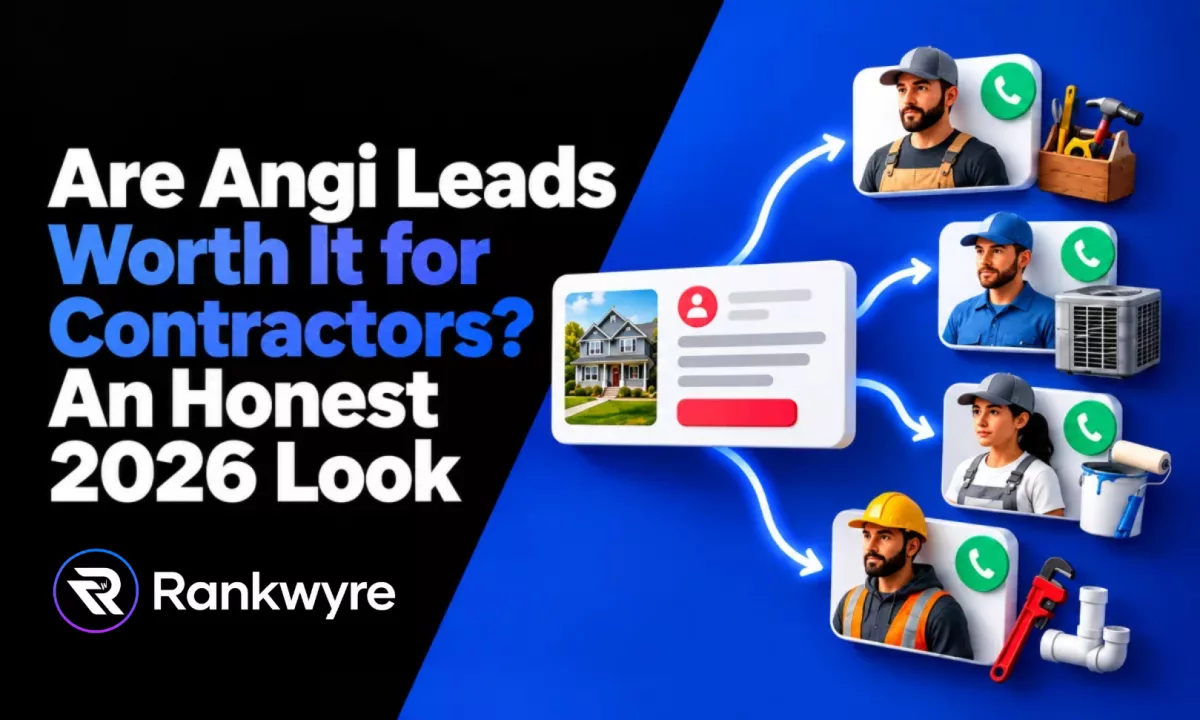
Angi sends the same homeowner request to several contractors at once, and you pay for the lead whether you win the job or not. That single fact decides most of whether Angi is worth it for you, and it is easy to miss when you are just trying to fill next week's schedule.
This guide walks through how Angi's lead model actually works, based on Angi's own pro-facing pages, and compares it with Thumbtack and Google Local Services Ads. Then it gives you a break-even calculator you can run with your own numbers, so the answer is not a guess. It closes with who lead sites make sense for, who they do not, and how to spend less on them over time.
Lead sites can work. Know your own numbers before you pay for one more lead.
Key Takeaways
- Angi's own credit policy page confirms you request a credit within 30 days of being charged, and unused credits expire six months after they are issued.
- Angi's SEC filing describes homeowners reviewing "profiles, ratings and reviews of presented professionals" (plural) for one request, which is the company's own confirmation that a request is not exclusive to one contractor.
- Thumbtack caps a customer's outreach at five pros in the first four hours, by its own Quality Commitment page, and automatically refunds a lead if you contacted the customer through Thumbtack and responded within four business hours, and they never reply to any pro within 72 hours.
- Google states plainly that with Local Services Ads "you only pay for leads related to your business," and a disputed lead that Google agrees is invalid is credited back to you.
- Whether any of these is worth it comes down to one calculation: your close rate times your profit per job, compared with what you pay per lead. Run that with your own numbers before you commit a budget.
- Lead sites tend to make the most sense for a new business with few reviews that needs volume right away, and the least sense for an established business with strong reviews and a website that already converts.
How Angi's Lead Model Actually Works
Angi's own pro FAQ page says it plainly: "you pay a nominal fee for each lead you match to," and that different sized jobs carry different lead fees. You are charged for being matched to a request, not for winning the job.
Angi's 2024 Form 10-K, filed with the SEC, describes the matching process this way: professionals are "presented to consumers by way of our proprietary algorithm," and consumers "review profiles, ratings and reviews of presented professionals and select the professional whom they believe best meets their specific needs." The plural wording (professionals, presented) is Angi's own confirmation that a single homeowner request can go out to more than one contractor, not just one.
The same filing states the payment model directly for this line of business: "professionals pay for connections to consumers." That is the core tradeoff. You are not paying for an exclusive introduction. You are paying for a shot at a request that other contractors in your trade and area may also be working.
Angi's lead credit policy, published on its own pro terms page, sets out exactly when you can get money back:
- A duplicate lead from the same consumer submitting the same request twice
- A lead from outside your service zip codes
- A lead in a job category that does not match your profile
- A lead that turns out to be a competitor testing the system
- Contact information that is completely wrong or disconnected
Credits must be requested within 30 days of the charge, come back as store credit rather than cash, and expire six months after they are issued if you do not use them. A lead where the homeowner simply does not call back, already hired someone else, or changed their mind does not qualify. That is a normal cost of doing business on Angi, not a billing error.
How Thumbtack's Pricing Compares
Thumbtack's own help center describes a different mechanic. You set your own lead price for each service, and that price is exact, not an estimate: "you choose how competitive you want to be by setting your lead prices... this is the exact amount you'll pay for each lead." You are billed automatically when a customer whose job matches your preferences reaches out to you directly.
Thumbtack also publishes a stated limit on competition. Its Quality Commitment page says it caps outreach "to five in the first four hours" of a customer's search, and that most customers contact fewer pros than that. Its Fair Shot Refund policy automatically refunds the lead if you communicated through Thumbtack, responded within four business hours, and the customer never replies to any pro they contacted within 72 hours.
So the shared-lead problem exists on Thumbtack too, capped at five contractors, while Angi does not publish a cap, with an automatic refund path built in for leads that go nowhere.
How Google Local Services Ads Work
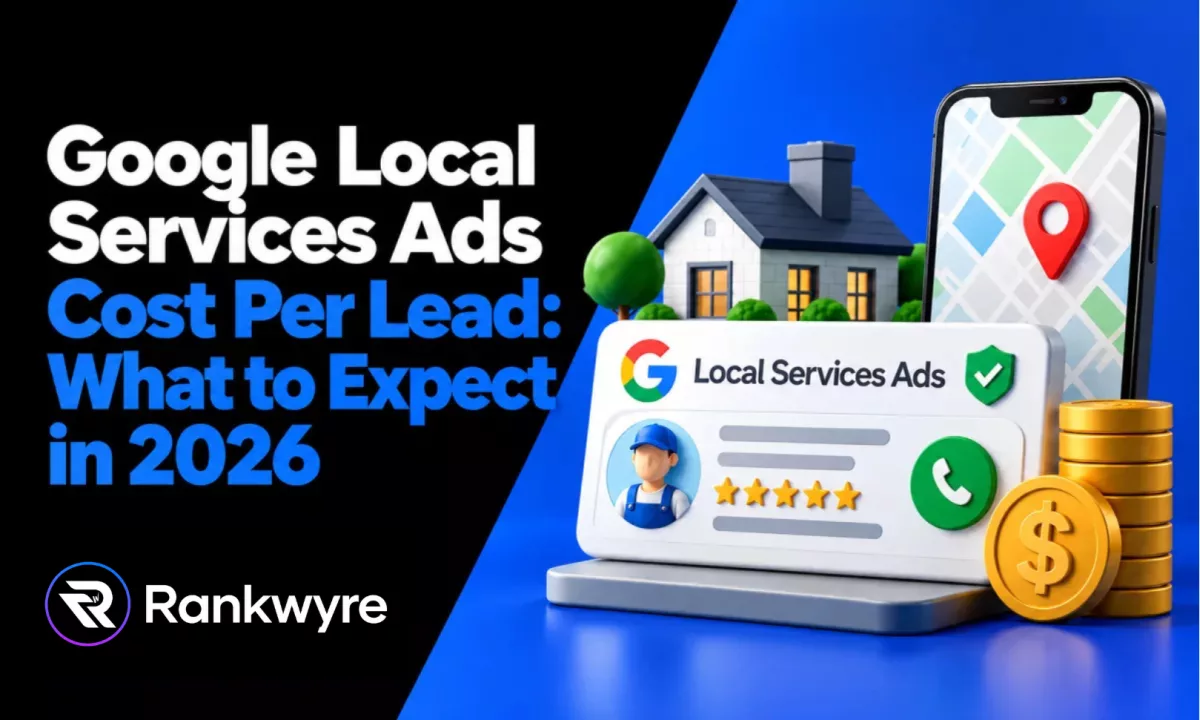
Local Services Ads run on a different model from either lead site. Google's own help page states: "you only pay for leads related to your business or the services you offer." A lead is a phone call or a message from a homeowner through your ad, priced by Google based on your trade, market, and the competition for that job type.
Google's support page also confirms a dispute path: "if you believe the lead you received isn't valid, you can immediately dispute a lead," and "a successfully disputed lead will be credited back to you" in the US and Canada. Health care categories are excluded from lead disputes. Because Local Services Ads carry Google's own verification badge, the ad itself can double as a trust signal on top of being a lead source, which is different from a listing on a third-party marketplace.
Angi vs. Thumbtack vs. Google Local Services Ads
Here is how the three compare on the points that matter most, based on each company's own pages:
| Platform | How you pay | Shared with other pros? | Dispute path |
|---|---|---|---|
| Angi | Charged per match, price varies by job size | Yes, described by Angi's own filing as multiple "presented professionals" per request | Store credit, requested within 30 days, expires in six months |
| Thumbtack | You set your own exact lead price | Yes, capped at five pros in the first four hours | Automatic refund if you contacted them through Thumbtack, responded within four business hours, and they never reply within 72 hours |
| Google Local Services Ads | Pay per qualifying call or message | Not shared the same way; you are bidding for placement, not one of a fixed group sent the same form | Immediate dispute, credited back if Google agrees it was invalid |
The practical difference: Angi and Thumbtack both distribute the same homeowner request to more than one contractor, so speed to respond and your closing skill matter as much as your profile. Google Local Services Ads route a call or message to you directly once you win the auction and pass verification, which behaves more like a phone-book listing that only charges when it works.

Run Your Own Break-Even Numbers
The honest answer to "is it worth it" is not a number anyone else can give you. It depends on four things you already know about your own business: what a lead costs you, how often you close a lead into a job, what an average job is worth, and what share of that job is actual profit after materials and labor (your gross margin).
Here is the calculation:
- Profit per closed job = average job value multiplied by your gross margin.
- Expected profit per lead = your close rate multiplied by profit per closed job, minus what you paid for the lead.
- Break-even close rate = lead cost divided by (average job value multiplied by gross margin). Close leads at a lower rate than this and the leads are losing you money before overhead.
Worked example, with every assumption labeled: say a lead costs you $60 (whatever your own invoice shows, from any source), your average job is worth $2,000, and your gross margin after materials and labor is 40 percent. Profit per closed job is $2,000 times 0.40, which is $800. If you close one in four leads (a 25 percent close rate), expected profit per lead is 0.25 times $800, minus the $60 lead cost, which comes out to $140 of profit per lead on average. Your break-even close rate at those numbers is $60 divided by $800, or 7.5 percent. Anything above that close rate and the lead spend is paying for itself.
Change any one input and the answer changes. A $60 roofing lead with a $12,000 average job is a very different bet than a $60 handyman lead with a $250 average job. Pull your own lead cost from your account, your own close rate from your CRM or a month of call logs, and your own margin from your books before you decide anything.
Who Lead Sites Are Worth It For, and Who They Are Not
Lead sites tend to earn their cost for a specific situation: a new company with no reviews yet, no ranking in the map pack, and a need for jobs on the schedule now rather than in six months. Paying for shared leads while you build your own Google Business Profile and review base can keep crews working during that gap.
They tend to earn less of their cost for an established company that already has strong reviews, ranks in the map pack for its main services, and has a website that converts its own traffic into calls and form fills. That company is paying to compete for a slice of a homeowner's attention it could often win for free through search and word of mouth. Every dollar spent on a shared lead is also a dollar not spent building the assets that stop requiring that payment.
Somewhere between those two is most established companies during a slow season, a new service line, or an unfamiliar zip code. In that case, run the break-even math above for that specific situation instead of applying a blanket answer to the whole business.
How to Reduce Your Dependence on Lead Sites
The way out of paying for shared leads does not mean cancelling every account on the same day. Build the channels that bring homeowners to you directly instead, so lead sites become one option among several rather than the main one.
- Your Google Business Profile: A complete, active profile with real photos, service categories, and a steady stream of reviews is what wins the map pack for free. See our Google Maps and local SEO service for what a full setup covers.
- Reviews, on a schedule: Ask every satisfied customer for a review the same day the job wraps, not months later. A steady flow of detailed reviews does more for trust than a high total count of short ones.
- A website built to convert: A homeowner who finds you through a review, a truck, or a referral still checks your website before calling. It needs your phone number in the header, real local photos, and a short form, not a slow template. See how we build business websites that are built for this.
- Search ads on your own terms: Once your site converts, search ads on specific, high-intent terms usually cost less per booked job than a shared lead, because you are not splitting the click with competitors who bought the same form submission. Our ads management team sets these up around your actual close rate, not just clicks.
- A past-customer list: A short email or text after a storm, a season, or a service interval brings back customers who already trust you, at close to zero marginal cost.
This is the same shift we walk through in more depth for one trade in our roofing company marketing guide, and the underlying math holds for any local service business paying for shared leads.
Common Mistakes With Lead Sites
- Mistake: Judging a lead site only by cost per lead. The fix: Track cost per signed job instead. A cheap lead that never closes costs more than an expensive one that does.
- Mistake: Letting every lead sit for hours before you call back. The fix: On a shared-lead platform, speed matters because the same request went to other pros. Build a same-hour response habit before you spend more on leads.
- Mistake: Requesting a credit for a lead you simply lost. The fix: Save credit requests for the reasons the platform actually honors, like duplicate leads or wrong contact information, and request them inside the stated window.
- Mistake: Staying on a lead site indefinitely without building owned channels. The fix: Set a review and Google Business Profile goal alongside your lead spend, and revisit the break-even math every quarter as those numbers improve.
FAQs
It depends on your numbers. Angi charges you when you are matched to a lead, and by Angi's own SEC filing, more than one contractor can be presented for the same request, so you are competing for the job, not guaranteed it. Run the break-even calculation above with your own lead cost, close rate, job value, and margin before deciding, and expect it to make more sense for a new company building volume than for an established one with a full pipeline.
Angi's own credit policy shows the company treats a lost bid, a non-responsive homeowner, or a change of mind as a normal cost, not something you get credited for. That means the money is worth it only when your close rate and job profit clear your break-even point, which is a calculation specific to your business, not a fixed answer.
Angi's own pro FAQ says lead fees vary by job size and directs pros to call for specific pricing rather than publishing a fixed rate card. Because the exact fee depends on your trade, market, and job type, pull your own recent invoices for the number to use in a break-even calculation instead of relying on a general figure.
They work differently rather than one being simply better. Thumbtack lets you set your own exact lead price and caps a customer's outreach at five pros in the first four hours, with an automatic refund if you contacted them through Thumbtack and responded within four business hours, and nobody replies within 72 hours. Angi charges a set fee per match and issues credits only for specific errors like duplicate or wrong-category leads. Compare both against Google Local Services Ads for your trade before choosing one.
Google prices each lead based on your trade, market, and the competition for that job type at the time, and does not publish a flat rate. Google's own help page confirms you pay only for qualifying calls or messages and can dispute one you believe is invalid, with a credit issued if Google agrees.
Yes, on all three, with different rules. Angi requires the request within 30 days of the charge and issues store credit that expires in six months. Thumbtack automatically refunds a lead if you contacted the customer through Thumbtack and responded within four business hours, and they never reply within 72 hours. Google lets you dispute a lead immediately and credits it back if the dispute is approved, except in health care categories.
Conclusion
Angi, Thumbtack, and Google Local Services Ads all sell access to homeowners who are ready to hire, and each one is transparent, on its own pages, about how you pay and what you are and are not owed a credit for. None of them owes you an exclusive lead, and none of them will build the reviews, website, or map ranking that eventually lowers your dependence on paying for one.
Pull your own lead cost, close rate, job value, and margin, run the break-even math above, and decide with your own numbers instead of a general opinion about any platform.
If you want help building the Google Business Profile, website, and ads setup that reduce what you pay lead sites over time, get started with Rankwyre.
About the author:
Rankwyre Team
Digital technology company, Miami, Florida
Rankwyre is a digital technology company based in Miami, Florida. It builds custom websites, ecommerce stores, web apps, CRM systems, and dashboards, then runs the SEO and ads that bring in customers.