SEO & Performance
Answer Engine Optimization: How to Get Cited by ChatGPT and Perplexity
How to structure content, schema and authority so AI answer engines quote your site.
Google search used to end with a click. Increasingly it ends with an answer. A growing share of searches now open with an AI Overview, a few sentences that summarise the answer before a single website link appears, and that one change is reshaping how much traffic a business website can expect from Google.
This is not a prediction. Two independent studies from 2025 measured the drop, and the numbers are large. Here is what the data actually shows, who feels it first, and the concrete changes that keep your site earning traffic and customers as AI answers spread.
Google's AI Overviews answer the question at the top of the results page, and people click through to websites far less as a result. Ahrefs measured a 58 percent drop in clicks to the number one result, and Pew Research found people click a traditional link on 8 percent of searches with an AI summary, against 15 percent without. The response is not to panic. It is to structure your site so the AI quotes you, and to compete harder on the searches where a visitor is ready to become a customer.
Two studies looked at this from different angles and reached the same conclusion. Ahrefs analysed 300,000 keywords using aggregated Google Search Console data and found that, by December 2025, the presence of an AI Overview cut the click-through rate for the number one organic result by 58 percent. That is up sharply from the 34.5 percent they measured in April 2025, so the effect is growing, not settling.
Pew Research watched real behaviour instead of rankings. Across 68,879 searches from 900 US adults in March 2025, people clicked a traditional search result on just 8 percent of visits when an AI summary was present, against 15 percent when it was not, close to half as often. Only 1 percent of those visits clicked a source link inside the summary, and people were more likely to stop browsing entirely, ending the session on 26 percent of AI-summary pages versus 16 percent of ordinary ones.
The pattern is consistent. When Google answers the question on the page, fewer people go looking for the answer anywhere else.
See what an AI crawler can actually pull from your site right now.
Run the free auditAI Overviews show up most on informational queries, the how-to, what-is and best-way questions. Those are exactly the searches small businesses have spent a decade answering with blog posts and guides to pull in top-of-funnel visitors. When the answer gets lifted into the summary, that traffic thins out first.
The businesses least exposed are the ones whose visitors still need to do something a summary cannot do for them: get a quote, see real work, book a call, buy a product. If your site earns its keep from transactional and branded searches, an AI Overview is far less of a threat than if it leans on ranking for generic informational terms.
There is a real upside here, and it is the whole game now. Being one of the handful of sources an AI Overview cites is worth more than ranking just below it.
Google's own position is that the clicks AI Overviews do send are higher intent, and that squares with the behaviour above. The smaller group who click through after reading a summary have already read the basics, so they arrive further along and closer to acting. The objective shifts from winning the tenth blue link to being a cited source, and to owning the searches where someone is ready to become a customer.
The work has a name, answer engine optimization, and it is concrete rather than mysterious.
If you would rather have this handled end to end, it is the core of how we build and rank sites at Rankwyre.
None of this is a one-time fix. The set of pages an AI engine cites shifts from month to month, so treat it as maintenance, not a project.
Track where you already rank in the top few results, because most AI citations still come from pages that rank well. Watch your branded and transactional queries separately from informational ones, since they behave very differently under AI Overviews. And check whether your key pages are even structured for extraction. Our free website audit is a fast place to start.
Want a site built to get cited by AI and convert the visitors who still click? That is exactly what we do.
See how we do SEOSeveral pages were competing to represent the same entity, leaving nothing that was clearly the source.
AI Overviews cite what they can identify with confidence. Ambiguity is what keeps you out of the answer.
Read the Brandon Gamagami case studyNo. Most AI citations still come from pages that rank in the top results, so classic SEO is the prerequisite. What changes is that ranking is no longer the finish line. Being cited in the summary and winning transactional searches now matter just as much.
It depends on your query mix. Ahrefs measured a 58 percent click-through drop for the number one result on keywords that trigger an AI Overview, and Pew found clicks on traditional links roughly halved when a summary appeared. Sites that rely on informational queries feel it most.
Lead each page with a concise answer, back claims with data and sources, add FAQ and Article schema, keep pages fresh, and earn a strong ranking first. These are the core moves of answer engine optimization.
No, but change what you write. Thin, generic informational posts are the most exposed. Depth, original data, real expertise and content tied to transactional or local intent still earn both traffic and citations.

How to structure content, schema and authority so AI answer engines quote your site.
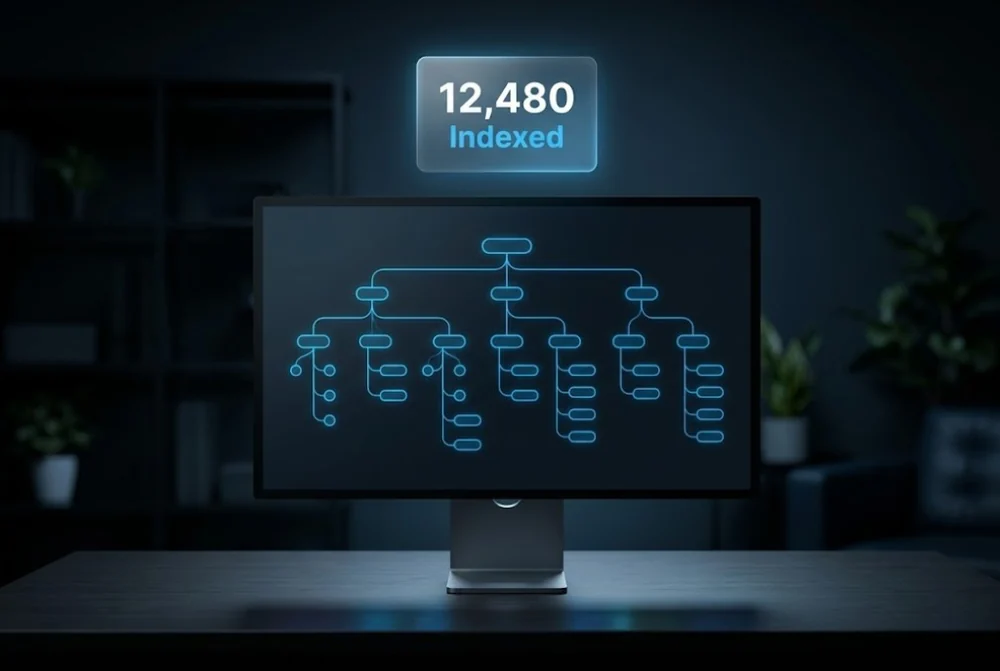
Sitemaps, structured data, redirects and the settings that keep Google happy as your site grows.
What actually moves LCP, CLS and INP, plus the website speed wins most teams skip.
From first sketch to launch day, we design sites that look unforgettable and convert like they mean it.