SEO & Performance
Technical SEO: A Checklist for Websites That Scale
Sitemaps, structured data, redirects and the settings that keep Google happy as your site grows.

Search no longer ends at a list of blue links. People ask ChatGPT, Perplexity or Google’s AI Overviews a question and read a synthesised answer that quotes a handful of sources. Answer engine optimization, or AEO, is how you become one of those quoted sources.
AEO does not replace SEO, it extends it. The same content that ranks in Google is the raw material AI engines pull from, but the structure and signals that earn a citation are specific. This guide covers what those engines reward in 2026 and how to earn the quote.
Answer engine optimization is the practice of structuring content so AI answer engines like ChatGPT, Perplexity and Google AI Overviews can extract, trust and cite it. The fastest wins in 2026 are leading each page with a concise plain-language answer, marking up questions with FAQ schema, keeping pages fresh, and backing claims with statistics, expert quotes and citations.
AI answer engines extract short, confident passages and attribute them to a source. Three things you control decide whether your page is that source: structure, freshness and credible sourcing.
Freshness carries surprising weight. Across commercial queries, roughly 83 percent of AI citations come from pages updated in the last twelve months, so a page that has not been touched in years is competing against ones that have. Position matters too: around 55 percent of AI Overview citations are pulled from the first 30 percent of a page, so the answer cannot be buried at the bottom.
Before optimising for ChatGPT, check what a crawler can actually read on your site today.
Run the free auditWrite in an inverted pyramid. Open every important page with a concise, plain-language answer of two or three sentences, then expand into context, examples and edge cases. Definitional pages should define the term first. How-to pages should give the steps first, then the detail under each one.
A short summary block near the top, like the quick answer at the start of this article, gives an engine a clean passage to quote and gives readers the payoff immediately. Phrase headings as the questions people actually ask, since those headings often become the prompt the engine is answering.
Models use surface signals as a proxy for credibility. Content studies in 2025 found that adding expert quotes lifted the odds of being cited by around 41 percent, while statistics and inline citations each added roughly 30 percent. Quotation marks, numbers and links to primary sources all read as evidence.
Attribute your content to a real author or organisation, cite the data you reference, and keep claims specific. Vague, unsourced copy is easy for an engine to skip in favour of a page that shows its work.
Clean semantic HTML does most of the work: one H1, descriptive H2s, ordered lists for processes and tables for comparisons. On top of that, add structured data. FAQ schema maps directly to the question and answer format these engines use, and Article schema confirms the author, date and topic.
Some teams now publish an llms.txt file to point AI crawlers at their key content. It is an emerging convention rather than a ranking factor, so treat it as a low-cost extra, not a substitute for clear pages and schema.
Answer engines do not crawl a separate web. For Google AI Overviews, around 38 percent of citations now come from pages already ranking in the top ten, down from about 76 percent in mid 2025 as Google leans harder on related queries than on the original result set. ChatGPT leans on a search index for fresh facts, and Perplexity openly favours recent, well-cited articles.
So the foundation is unchanged: be crawlable and indexed, earn links and topical authority, and pass Core Web Vitals. AEO is the layer you add once the fundamentals are in place, not a shortcut around them.
Citations move. Month to month, the set of pages an engine quotes can drift by 40 to 60 percent, so a single optimisation pass will not hold. Track where you are cited across ChatGPT, Perplexity and AI Overviews, note the prompts that surface your competitors, and refresh your highest-value pages on a quarterly schedule.
The problem was not ranking, it was ambiguity: several pages competed to represent the same person, so no single one carried authority.
Answer engines have the same problem you do. If nothing on your site is unambiguously the canonical source, there is nothing clean to cite.
Read the Brandon Gamagami case studySEO aims to rank a page in a list of search results. AEO aims to have your content extracted and cited inside an AI generated answer. They share the same foundation of crawlable, authoritative content, but AEO adds a focus on concise answers, structured data and credibility signals that a language model can quote.
Yes. FAQ schema presents your content in the exact question and answer format AI answer engines use, which makes it easy for them to lift a clean, attributable passage. It is one of the highest-value, lowest-effort additions for AEO.
Aim for a quarterly refresh on your most important pages. Around 83 percent of AI citations come from pages updated in the last year, and pages left stale for longer are far more likely to lose their citations.
Yes. Most AI citations come from pages that already rank well in Google, so being crawlable, indexed and authoritative is the prerequisite. AEO is a layer on top of solid SEO, not a replacement for it.
Sitemaps, structured data, redirects and the settings that keep Google happy as your site grows.

Optimise your Google Business Profile, win recent reviews and rank in the local map pack.
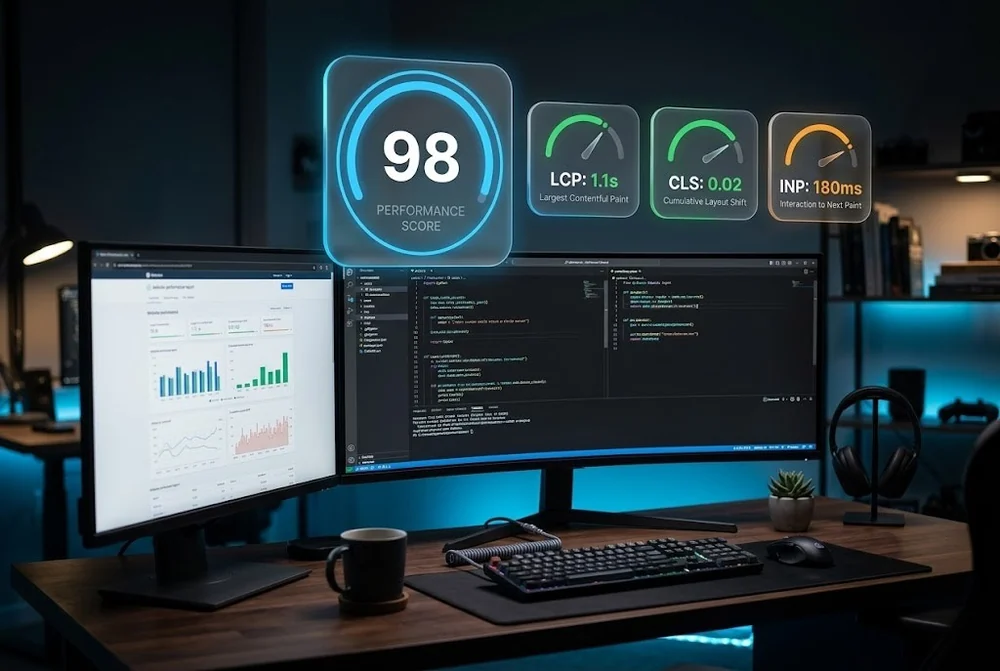
What actually moves LCP, CLS and INP, plus the website speed wins most teams skip.
From first sketch to launch day, we design sites that look unforgettable and convert like they mean it.