Web Design
AI Website Builders vs a Web Studio: An Honest 2026 Comparison
Where AI builders win, where they quietly cost you, and how to choose for your business.
The honest answer to what a website costs is that it depends, but that is not much help when you are trying to budget. So here is the useful version: the real ranges for each way of getting a site built in 2026, what actually moves the price, and how to tell what your business needs.
The key idea to hold onto is that a website is not a one-time purchase like a logo. It is a tool that either earns its keep or does not, so the smart question is cost against return, not cost alone.
A small business website in 2026 can cost anywhere from almost nothing on a DIY builder to well over ten thousand dollars with an agency. The price is driven by design, custom development, SEO and ongoing support, not by page count. The better question is not the sticker price but the return: a site that ranks and converts pays for itself, and a cheap one that no one finds is the expensive option.
Rankwyre is a digital technology company based in Miami, Florida, that builds custom websites, ecommerce stores, web apps, CRM systems, and dashboards, then runs the SEO and advertising that bring in customers. It reads the real KPIs to find where a business is losing customers, fixes it, and proves the difference with numbers. See what the plans cost.
There are really three routes, and they sit at very different price points.
Notice that page count is nowhere on this list. What you are really paying for is the work that makes a site perform.
Want to know how your own site scores on this? The free audit checks it and emails you the results.
Run the free auditThe sticker price hides a real choice: a big one-time build, or a smaller setup plus a monthly plan. It is not just a payment schedule, it changes what you get.
A one-time build can start rotting the day it launches, because nobody owns the upkeep. A model with a modest setup fee and a monthly plan that bundles hosting, SSL, support and maintenance keeps the site fast, secure and ranking over time. That is how our plans work: a one-time setup from 299 dollars, then a monthly price that includes the parts most people forget to budget for.
A website is one of the few business costs that is supposed to pay you back. That reframes the whole question.
A 500 dollar site that never ranks and never converts is expensive, because it returns nothing. A well-built site that brings in a steady stream of qualified leads is cheap at several times the price, because it earns. Before you anchor on the lowest number, ask what each option is likely to return, then compare on that.
Ranges only get you so far. To budget properly, price your actual site, not the average one.
List the pages you truly need, decide whether you want to own maintenance or have it handled, and get a real quote. Our cost calculator gives you a ballpark in a minute, and a quick website audit shows what your current site is costing you in lost rankings and conversions today.
Want a real number for your site instead of a range? Get a straight quote and a plan that fits.
See our pricingAnywhere from almost nothing on a DIY AI builder to several thousand dollars with a freelancer, to well past ten thousand with an agency. What you pay for is design, custom development, SEO and ongoing support, not the number of pages.
Because the work behind them is different. A template filled in by AI is cheap. A site designed around your customer, built to rank and convert, made genuinely fast, and maintained over time takes real work, and it returns more.
A one-time build can start decaying the day it launches if nobody maintains it. A modest setup fee plus a monthly plan that includes hosting, support and maintenance keeps the site fast and ranking, and spreads the cost.
List the pages you actually need, decide whether you want to own maintenance, and get a real quote. A cost calculator gives you a quick ballpark, and an audit shows what your current site is costing you in lost traffic.
Where AI builders win, where they quietly cost you, and how to choose for your business.
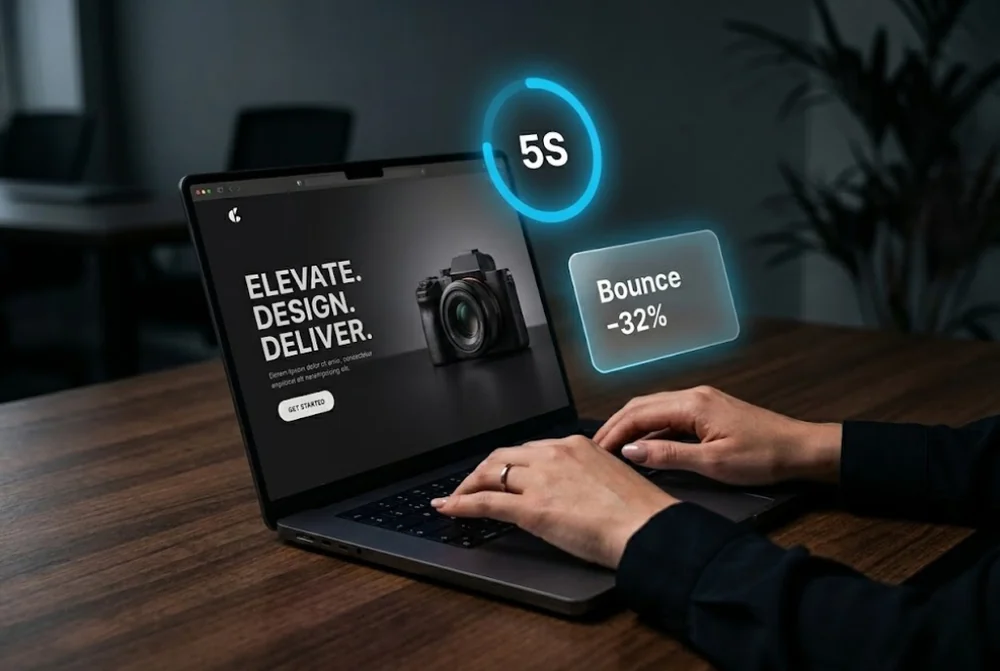
What a visitor must understand in the first five seconds, and how to design for it.
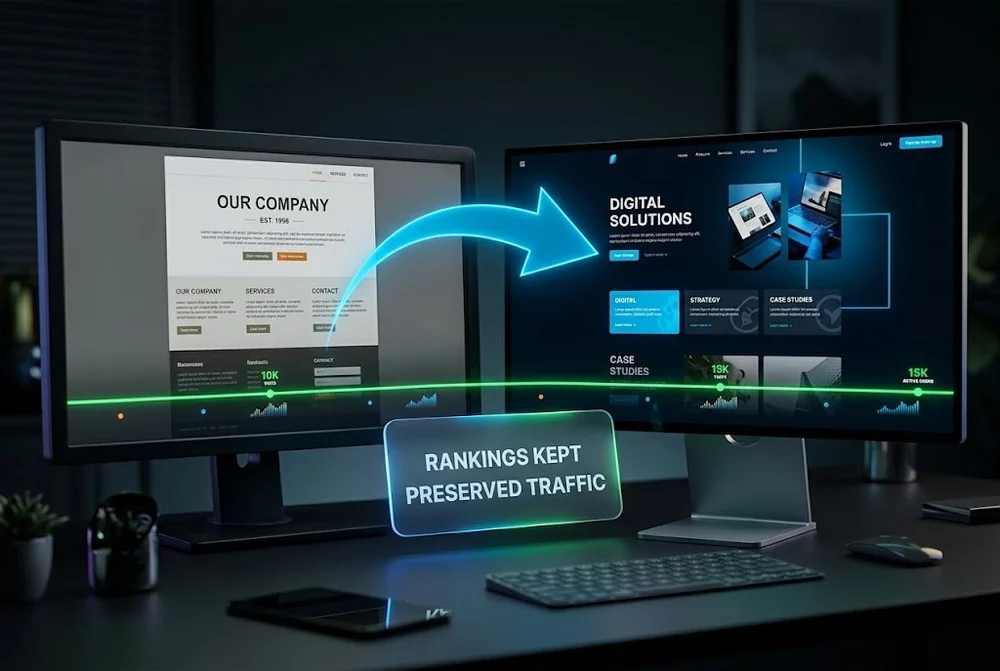
Redirects, parity and the checklist that protects your rankings through a redesign.
From first sketch to launch day, we design sites that look unforgettable and convert like they mean it.